Garlic Butter Chicken Thighs with Lemon: Step-by-Step Instructions
Instructions
- Take the thighs out of the fridge 20 minutes before cooking and dry them thoroughly with kitchen paper, skin side especially. Any water on the skin has to boil off before browning can begin, and while it does the fat underneath is already overcooking.
- Season both sides with the salt, pepper and paprika, then leave the thighs skin-up on a plate for 10 minutes. The salt pulls a little moisture to the surface, which then evaporates, leaving the skin drier than when you started.
- Lay the thighs skin-down in a cold, dry cast iron pan, leaving a finger of space between them, and only then set the pan over medium-low heat. A cold start lets the thick layer of fat under the skin melt out gradually instead of seizing; a hot pan sets the skin in seconds and traps that fat beneath it, which is how you get skin that looks brown but chews like rubber.
- Cook undisturbed for 12 to 15 minutes. The skin will release a surprising amount of fat; spoon off all but a tablespoon or so halfway through, or the thighs end up frying rather than rendering. Do not move them, press them or lift them to check before the 10 minute mark.
- Turn the thighs only when they release from the pan on their own and the skin is deep, even gold. If a thigh sticks, the crust is not finished and tearing it now costs you the best part of the dish. Cook the flesh side for 3 to 4 minutes, then lift everything onto a plate, skin facing up.
- Pour off the rendered fat, leaving about a tablespoon and all the browned bits stuck to the pan. Take the pan off the heat for 30 seconds so it drops below searing temperature before anything else goes in.
- Add half the butter and all the sliced garlic to the pan over low heat and stir for 45 to 60 seconds, until the slices turn pale gold and smell sweet. Garlic goes in after the sear and never before: it burns at a far lower temperature than the one needed to crisp skin, and burnt garlic turns the whole sauce bitter in a way no amount of lemon will cover.
- Pour in the hot stock and the lemon juice, add the Dijon, the thyme and the chilli flakes if using, and scrape the base of the pan with a wooden spoon. Everything stuck down there is browned chicken protein, and it dissolves into the liquid as the sauce reduces by about a third over 2 to 3 minutes.
- Return the thighs to the pan skin-up, sitting them in the sauce rather than under it, and finish either in an oven at 200 °C (400 °F) for 8 to 10 minutes or covered on a low hob for 8 minutes. They are done at 75 °C (165 °F) at the bone; thighs are forgiving and a few degrees over does them no harm.
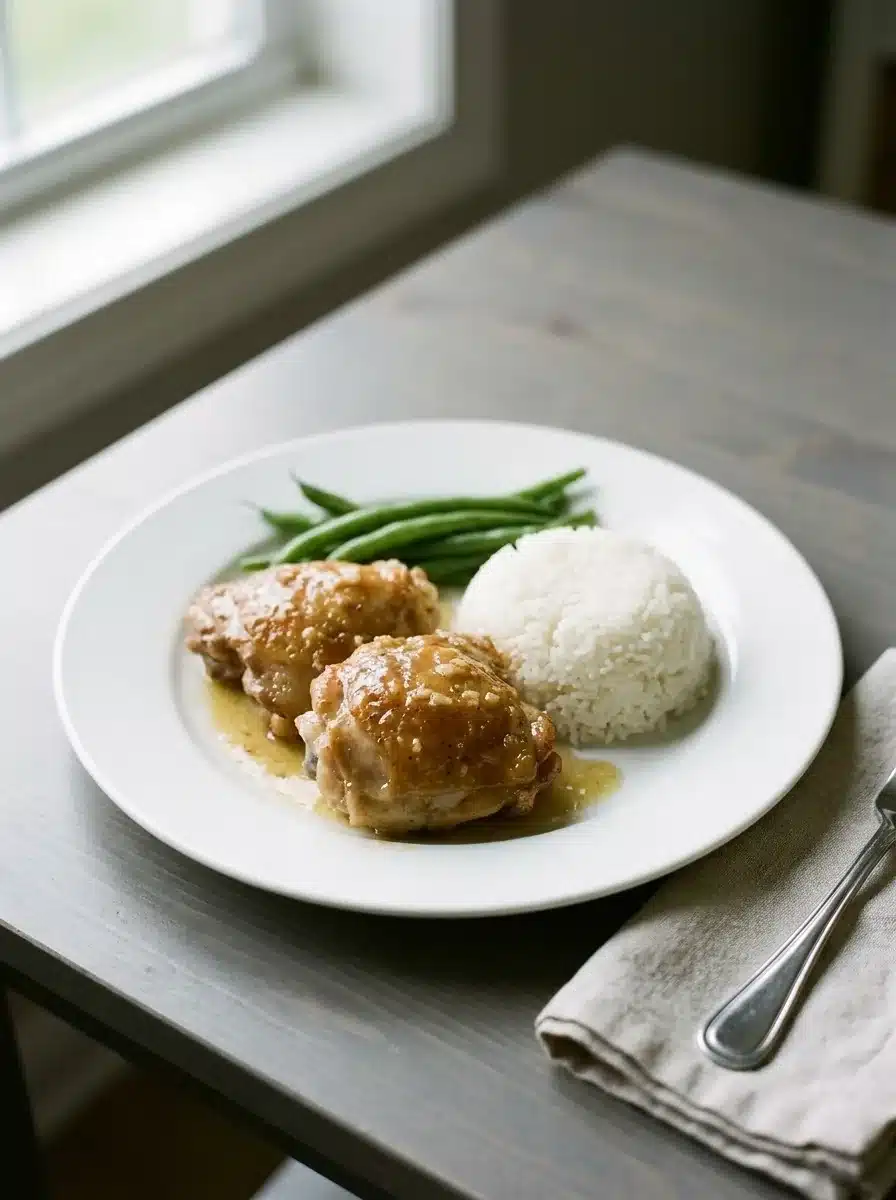
- Off the heat, swirl in the remaining cold butter a cube at a time until the sauce turns glossy, then stir through the lemon zest and parsley. Rest for 5 minutes, spoon the sauce around the thighs rather than over them, and finish with a little flaky salt.
Recipe Variations
Creamy version. Replace half the stock with 100 ml of double cream, added after the reduction. The sauce becomes a coating one, better over pasta than over rice.
With white wine. Deglaze with 80 ml of dry white wine before the stock and let it cook off for a minute. It sharpens the sauce and suits a richer side dish.
Whole roasted garlic. Swap the sliced cloves for a head of garlic, halved across and roasted cut-side down in the pan for 20 minutes beforehand. Sweeter, softer, less assertive.
Herb-led. Rosemary and sage in place of thyme and parsley, added with the stock rather than at the end, give an autumn version of the same dish.
Chicken breasts. Use skin-on breasts, sear 6 minutes skin-down from cold, and take them out at 65 °C. They dry out far faster than thighs, so the thermometer stops being optional.
Sheet pan. Render the skin in the pan as written, then finish the thighs on a tray set over halved new potatoes so the fat drips onto them.
Serving Ideas
The sauce is the deciding factor: whatever you serve should be able to soak some of it up. Crushed new potatoes, soft polenta, plain rice or a thick slice of sourdough all do the job, and none of them compete with the lemon.
For a green element, choose something with a little bitterness or bite rather than something sweet. Blanched tenderstem broccoli, wilted spinach with nutmeg, or a plain green salad dressed with nothing more than olive oil and salt all balance the butter well.
If you are cooking for guests, bring the pan to the table and let people serve themselves, spooning sauce onto their own plate first and setting the thigh on top. It keeps the skin crisp and saves plating eight pieces of chicken while they cool.
A dry white with some acidity suits it, and so does sparkling water with a wedge of the same lemon you zested.
Keeping It Fresh
Store the chicken and the sauce in separate containers in the fridge for up to three days. Left sitting in liquid overnight the skin absorbs it and turns soft, and nothing will bring it back.
To reheat, warm the thighs skin-up in a 200 °C oven for 8 to 10 minutes, which re-crisps the skin, and heat the sauce gently in a pan on the side. A microwave reheats the meat perfectly well but ruins the skin entirely, so it is only worth it if you were going to remove the skin anyway.
The cooked chicken freezes for up to two months off the bone. The sauce does not freeze as cleanly, since the butter emulsion breaks on thawing; if it splits, whisk in a teaspoon of cold water over low heat and it usually comes back together.
Leftover meat pulled off the bone is good cold in a sandwich with the sauce used as a dressing, which is arguably the best thing to do with the second half of the batch.
Reader Questions Answered
Can I use boneless, skinless thighs?
You can, and the sauce is just as good, but the dish becomes a different one. Without skin there is nothing to render, so start in a hot pan with a tablespoon of oil, sear 4 minutes a side, and skip the oven stage entirely.
Why start in a cold pan?
Chicken skin sits on a thick pad of fat. Low, gradual heat melts that fat out and the skin dries and crisps in it. A preheated pan browns the outside before the fat has moved, which gives you colour without crunch.
My garlic keeps burning. What am I doing wrong?
It is going in too early or too hot. Sear the chicken first, take the pan off the heat for half a minute, then add the garlic to melting butter over a low flame for under a minute. Sliced garlic is also more forgiving than minced.
Can I make this without a cast iron pan?
Yes. Any heavy-based stainless steel pan works the same way. Avoid thin nonstick: it does not hold enough heat for an even sear and the fond you need for the sauce will not form on the surface.
How do I keep the skin crisp when serving?
Never spoon sauce over the top. Pool it on the plate and set the thigh on it skin-up. Serve within a few minutes of resting, and keep any lid off the pan once the chicken is back in it.
Wrapping Up
Everything that makes this dish work comes down to sequence. Dry skin into a cold pan, patience for twelve minutes, garlic only once the heat has come down, and the chicken back in skin-up so the sauce never drowns the crust.
Get that order right and the rest is almost impossible to spoil. It is a weeknight dinner that behaves like a restaurant one, out of a single pan, in about half an hour.
Related recipes: Baked Spinach Artichoke Dip with Three Cheeses, Breakfast Burritos with Egg, Cheese and Potato, Chicken Cobbler with a Golden Biscuit Top, Chicken Gnocchi Soup with Spinach and Carrots, High Protein Jello Cups Greek Yogurt.
Learn more: Chicken on Wikipedia · food storage & safety (FoodSafety.gov).
◆ ◆ ◆
← Back to Garlic Butter Chicken Thighs with LemonGet new recipes
One tasty homemade recipe in your inbox each week. No spam, unsubscribe anytime.


Comments (18)