Keto Salmon Fillet
↓ Jump to Recipe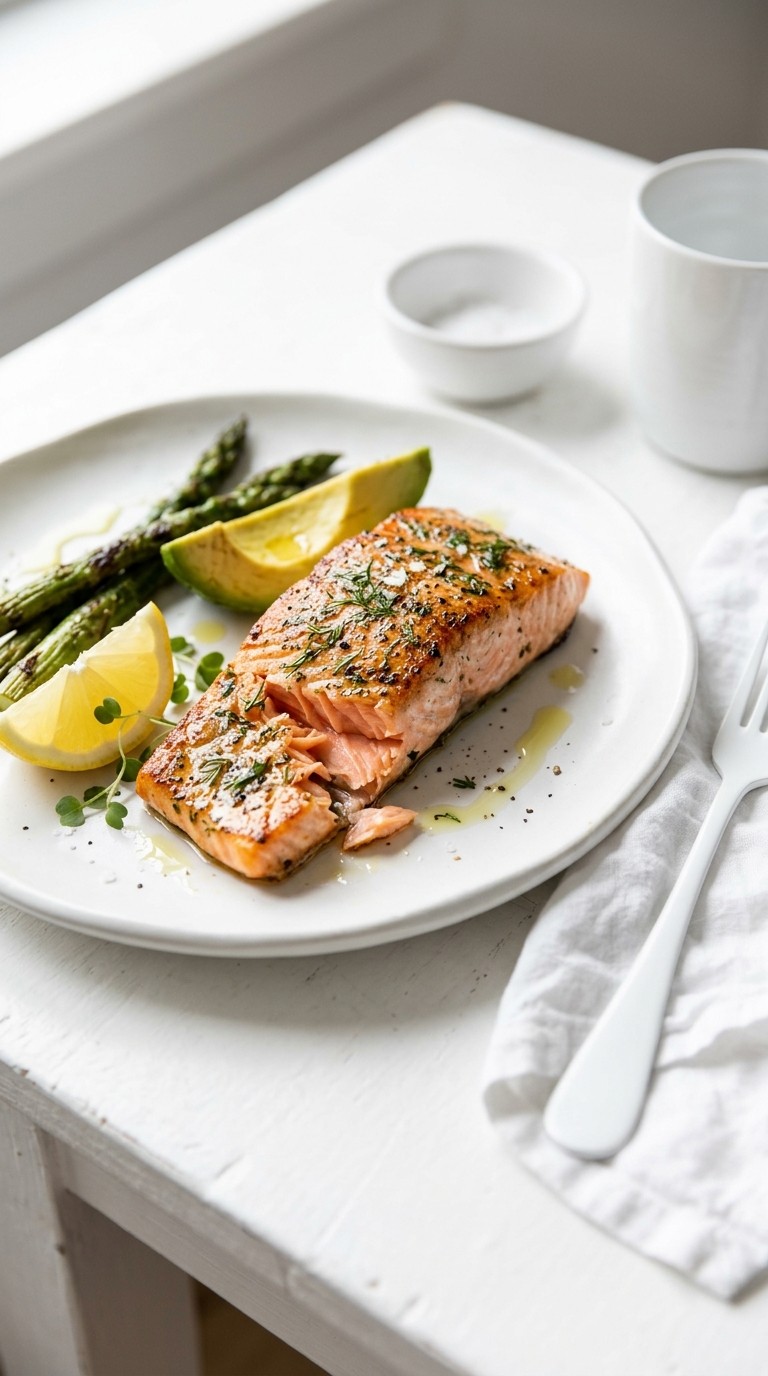
A quick, low‑carb salmon fillet cooked in a skillet with lemon, butter, and herbs—perfect for busy weeknights.
This Keto Salmon Fillet delivers a crisp, buttery crust while staying firmly within a low‑carbohydrate framework. The recipe relies on pantry staples you likely already have, so there’s no need for a specialty grocery run. In about thirty‑five minutes you’ll have a protein‑rich main dish that satisfies both flavor cravings and dietary goals. The method uses a hot skillet to sear the fish, then finishes with a quick butter‑lemon sauce that adds richness without excess carbs. Serve it with a simple green salad or roasted low‑carb vegetables for a complete meal.
Ingredients
- 4 (about 600 g) salmon fillets, skin on, about 6 oz each
- 2 Tbsp (30 ml) olive oil
- 1 tsp (5 g) kosher salt
- ½ tsp (2.5 g) freshly ground black pepper
- 1 tsp (5 g) garlic powder
- 1 tsp (5 g) smoked paprika
- 1 Tbsp (15 ml) fresh lemon juice
- 1 Tbsp (15 g) unsalted butter, cut into pieces
- 1 Tbsp (15 g) chopped fresh dill
- 1 Tbsp (15 g) chopped fresh parsley
- ½ lemon, sliced into rounds
- Optional: 1 tsp (5 g) red pepper flakes for heat
This skillet‑seared salmon uses pantry‑friendly seasonings and fresh herbs to create a balanced, keto‑approved main course. The ingredient list includes both metric and imperial measurements so you can follow it no matter which system you prefer.
All items are readily available at a typical American grocery store, and the recipe avoids any pork or alcohol‑based components, keeping it suitable for halal dietary restrictions.
Essential Kitchen Tools
| Tool | Why Needed |
|---|---|
| Non‑stick skillet (10‑inch) | Provides even heat and prevents the delicate fish from sticking. |
| Tongs | Allows safe flipping of the fillets without breaking them. |
| Measuring spoons | Ensures accurate seasoning and sauce proportions. |
| Fish spatula | Helps slide the cooked fillet onto a plate while preserving the crust. |
| Instant‑read thermometer | Confirms the internal temperature for perfect doneness. |
Why This Recipe Works
The success of this dish hinges on three core principles: high heat, proper seasoning, and a finishing butter‑lemon emulsion. By starting with a hot pan, the skin quickly releases from the flesh and forms a crunchy, flavorful crust that locks in moisture. The spice blend adds depth without introducing carbs, keeping the meal keto‑compatible. Finally, the butter and lemon juice create a glossy sauce that coats the fish, enhancing richness while maintaining a bright, citrusy balance.
Pro Tips for Better Results
1. Use a fillet with the skin on; the skin acts as a barrier that protects the flesh from overcooking and adds a satisfying crunch when crisped.
2. Let the seasoned salmon sit for five minutes before cooking; this allows the salt to draw out excess moisture, which then re‑absorbs, resulting in a more flavorful interior.
3. When adding butter, keep the heat at medium; too high a temperature can cause the butter to brown or burn, imparting a bitter taste.
4. Finish with a squeeze of fresh lemon juice right before serving; the acid brightens the rich butter and cuts through the natural oiliness of the salmon.
Nutrition Facts (per serving)
| Nutrient | Amount |
|---|---|
| Calories | 480 kcal |
| Total Fat | 32 g |
| Protein | 42 g |
| Net Carbs | 2 g |
| Fiber | 0 g |
Keto Salmon Fillet
A quick, low‑carb salmon fillet cooked in a skillet with lemon, butter, and herbs—perfect for busy weeknights.
Ingredients
Instructions
- Pat dry the salmon fillets with paper towels; removing surface moisture helps the skin become crisp when it hits the hot pan.
- Mix salt, pepper, garlic powder, smoked paprika, and optional red pepper flakes in a small bowl, then sprinkle evenly over both sides of each fillet to create a flavorful crust.
- Heat a non‑stick skillet over medium‑high heat and add olive oil, allowing it to shimmer but not smoke before the fish goes in.
- Place the fillets skin‑side down, pressing gently for 10 seconds to ensure full contact with the pan, and cook for 4‑5 minutes until the skin releases easily and is golden brown.
- Flip the fillets carefully with tongs , reduce heat to medium, and add butter, lemon juice, dill, and parsley; the butter will melt and combine with the lemon to form a quick sauce.
- Baste the fish with the butter‑lemon mixture for another 3‑4 minutes, spooning the sauce over the top to infuse flavor and keep the flesh moist.
- Check doneness by inserting a thermometer into the thickest part; it should read 125‑130 °F (52‑54 °C) for a tender, medium‑rare finish.
- Remove the skillet from heat, let the fillets rest for two minutes while the sauce thickens slightly, then transfer to a serving platter.
- Garnish with lemon slices and a sprinkle of extra fresh herbs, then serve immediately for the best texture and flavor.