Miso Glazed Roasted Cabbage Flowers with Miso Tahini: Step-by-Step Instructions
Step-by-Step Instructions
Step 1: Parboil cabbage
Fill a wide, deep pan three quarters full with water and add the salt. Bring to a boil, then lower the heat to the lowest setting. Add the cabbage halves, cover and simmer for 15 to 20 minutes until the cabbage is slightly tender but still firm enough to hold its shape.
Step 2: Drain and open
Drain the cabbages and place them upside down on a cooling rack to allow all trapped water to escape. Once they are cool enough to handle, turn them cut-side up and gently pull the leaves apart so they open up like a blooming flower.
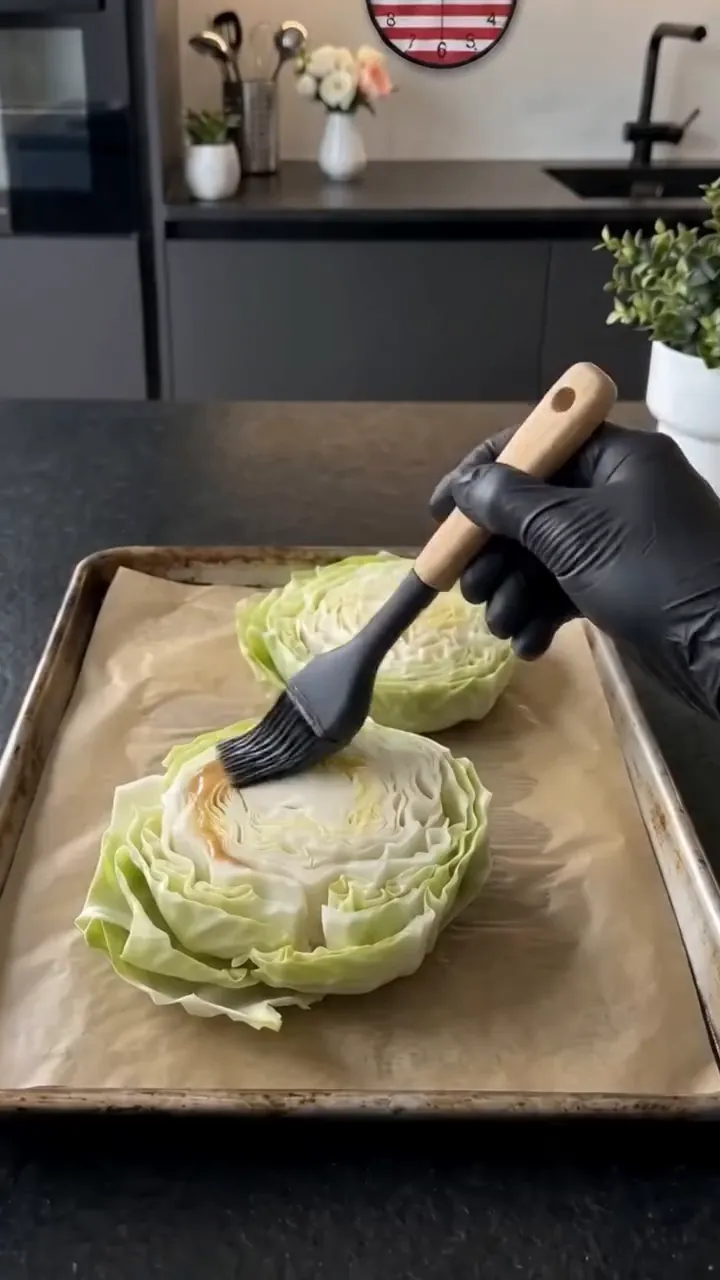
Step 3: Prepare the glaze
Preheat your oven to 450°F (230°C). In a bowl, whisk together the white miso, honey, brown sugar, soy sauce, rice vinegar, sesame oil, olive oil, and warm water until completely smooth. Set aside 4 tablespoons for the tahini sauce and keep the rest for roasting.
Step 4: Roast the flowers
Place the cabbages cut side up in a baking dish. Brush the glaze generously over and between the leaves. Roast for 25 minutes, then move to the broiler. Broil for up to 10 minutes until the edges are deeply caramelized, watching very closely to prevent burning.
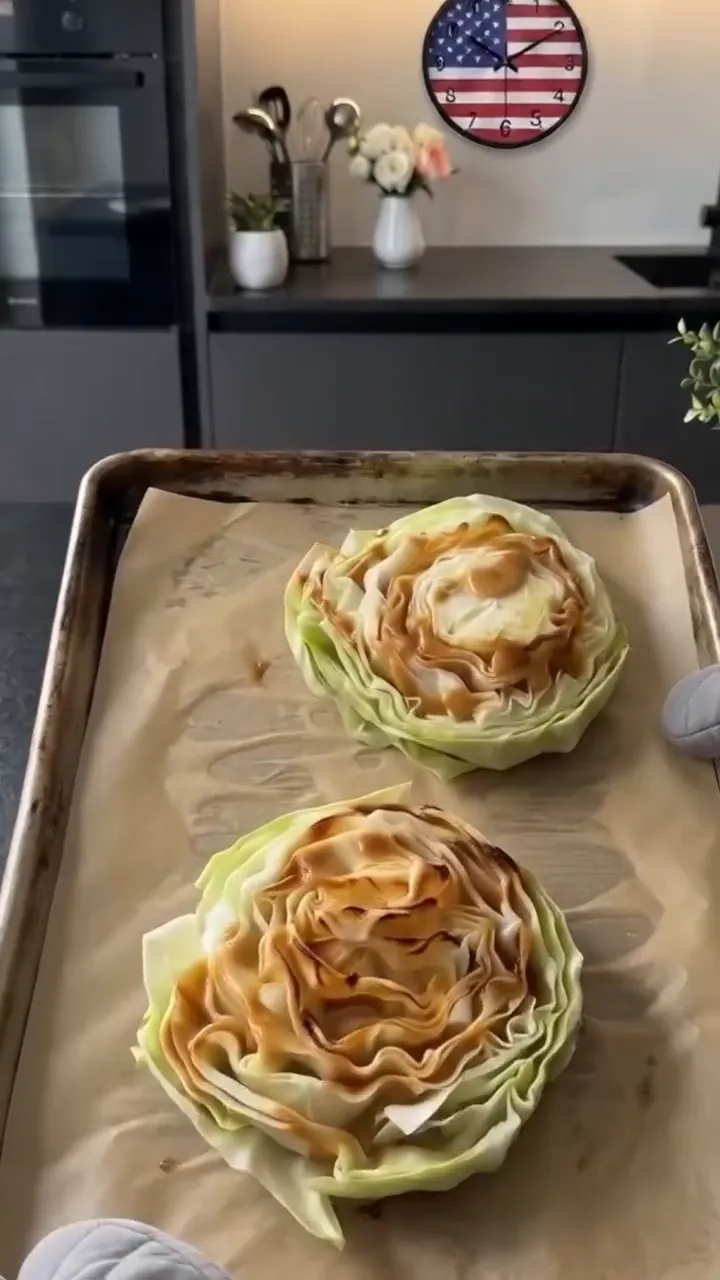
Step 5: Make tahini and furikake
Whisk the tahini, lemon juice, 4 tablespoons of glaze, and iced water until smooth; transfer to a squeeze bottle. For the furikake, pulse cashews until finely chopped, tear in nori and pulse again. Stir in sesame seeds and flaky salt.
Step 6: Assemble and serve
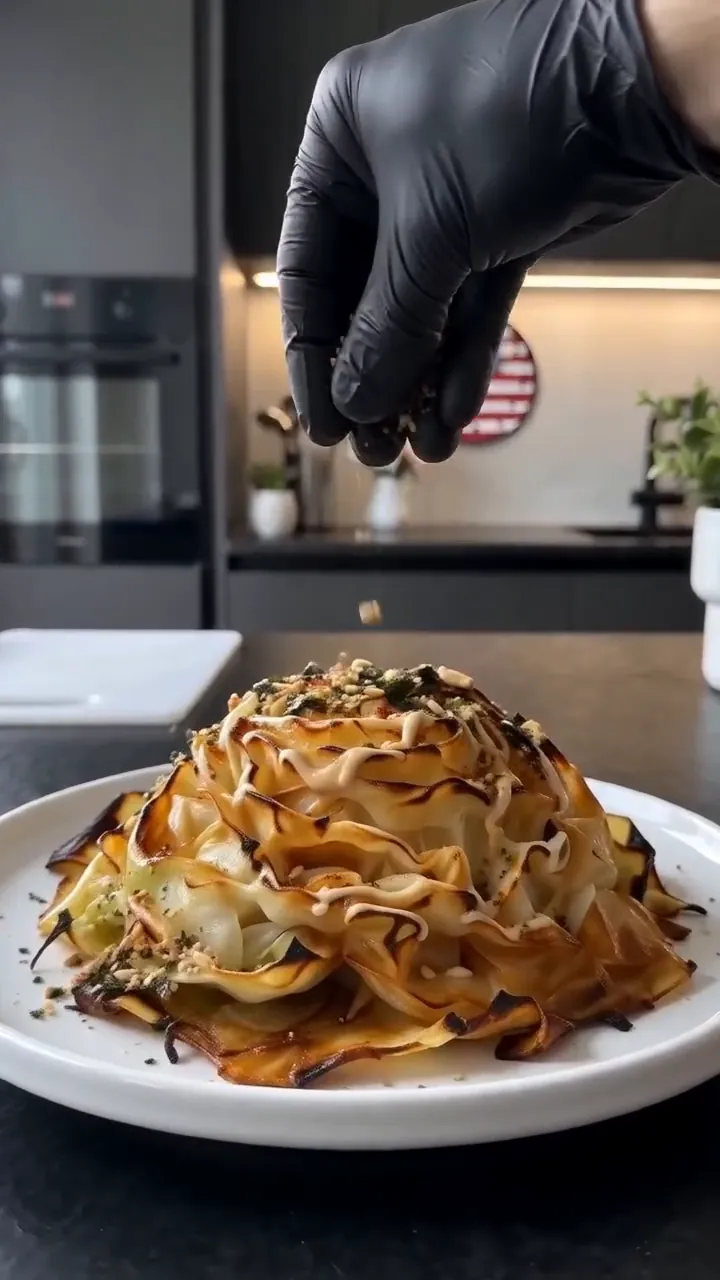
While the cabbages are still hot, brush them with the remaining glaze. Drizzle generously with the miso tahini and a touch of olive oil. Sprinkle with Aleppo pepper and a generous amount of the cashew furikake before serving immediately while still warm.
Tips for Success
- Do not overcook the cabbage in the water; it must remain firm to ensure it opens into a flower shape.
- Ensure you drain the cabbages upside down thoroughly; if they are wet, the glaze will slide right off during roasting.
- Watch the broiler constantly because the honey and sugar in the glaze caramelize very quickly and can burn in seconds.
- You can store leftover furikake in an airtight jar for one week or the extra glaze in the fridge for one week.
Variations
- Swap white miso for red miso if you prefer a much bolder, saltier fermented flavor profile.
- Add sliced fresh jalapeños to the glaze for a noticeable kick of heat alongside the Aleppo pepper.
- Use cauliflower florets instead of cabbage for a different vegetable base that uses the same delicious glaze and sauce.
Storage and Reheating
Store any leftover cabbage flowers in an airtight container in the refrigerator for up to three days. To reheat, place them in the oven at 350°F for 10 minutes to maintain the texture. The leftover furikake stays best in a dry jar at room temperature for a week to keep its crunchiness.
Frequently Asked Questions
Can I use a different type of miso?
Yes, you can use red miso for a bolder flavor, but be aware that red miso is saltier than the white miso, so you might want to slightly increase the honey to balance the salt.
What if my tahini is too thick?
If the miso tahini sauce is too thick to squeeze from the bottle, simply add one more teaspoon of iced water at a time and whisk until it reaches the desiredable consistency.
Can I substitute the cashews in the furikake?
Absolutely. You can use toasted almonds, walnuts, or even sunflower seeds. The goal is to provide a crunchy textural element to contrast with the soft, roasted cabbage leaves.
Is it possible to make this ahead of time?
You can parboil the cabbage and make the toppings a day in advance. However, the roasting and final assembly are best done right before serving to ensure the cabbage is warm and perfectly caramelized.
Conclusion
These Miso Glazed Flowers are a testament to the magic of vegetable-forward cooking. The combination of the savory miso, the creamy tahini, and the nutty furikake creates a complex flavor profile that will impress any guest. Whether you are hosting a formal dinner or want a special weeknight meal, this dish is guaranteed to be a showstopper.
More Golden Crust Kitchen recipes: Cheesy Tomato Cauliflower Steaks, Baked Cabbage Steaks with Ground Beef, Tomato and Cheese, Cheesy Baked Cabbage Steaks, One-Pan Cheesy Ground Beef Cauliflower Steaks, Cheesy Broccoli Meat Stacks.
Learn more: safe cooking temperatures (FoodSafety.gov) · food safety basics (USDA).
◆ ◆ ◆
← Back to Miso Glazed Roasted Cabbage Flowers with Miso TahiniGet new recipes
One tasty homemade recipe in your inbox each week. No spam, unsubscribe anytime.


Comments